

Aluminum Composite Panel (ACP) is a flat panel consisting of two thin aluminum sheets bonded to a non-aluminum core, typically made of polyethylene or fire-resistant mineral-filled core. It is commonly used for exterior and interior architectural cladding or façade systems, signage, and partition walls. ACPs offer many advantages over traditional materials, including durability, lightweight, versatility, fire resistance, and cost-effectiveness. They come in various colors, finishes, textures, and sizes, and can be easily fabricated and installed by skilled professionals.
-
![Brushed Aluminum Composite Panels]()
Brushed Aluminum Composite Panels
Add to Inquiry -
![Stone Grain Aluminum Composite Panels]()
Stone Grain Aluminum Composite Panels
Add to Inquiry -
![Coloured Aluminium Composite Panel]()
Coloured Aluminium Composite Panel
Add to Inquiry -
![Brushed Aluminum Composite Panel Decoration Materials]()
Brushed Aluminum Composite Panel Decoration Materials
Add to Inquiry -
![Brushed ACP Aluminum Composite Panel ACM Aluminum Composite Material]()
-
![Marble Finish ACP Granite Color Aluminum Composite Panel]()
Marble Finish ACP Granite Color Aluminum Composite Panel
Add to Inquiry -
![Aluminum Composite Panel With Colors Painting For Exterior Decoration Panel]()
-
![Wood Grain ACP Imitation Wood Aluminum Composite Panel ACM]()
Wood Grain ACP Imitation Wood Aluminum Composite Panel ACM
Add to Inquiry -
![4mm Aluminum Composite Panels For Exterior Wall ACP ACM Sheets]()
-
![Exterior Wall Cladding 4mm Aluminum Composite Panel Waterproof Pvdf Aluminum Composite]()
-
![Brushed Color High Quality Wall Cladding Acp Aluminum Composite Panel 4mm Thickness]()
-
![Decorative Acp Wood Texture Aluminum Composite Panel]()
Decorative Acp Wood Texture Aluminum Composite Panel
Add to Inquiry


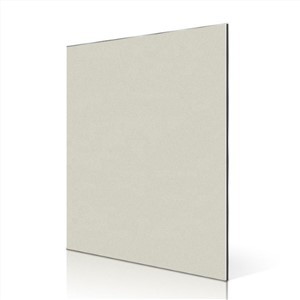


Advantages of Aluminum Plastic Panels
Lightweight
Aluminum plastic panels are lightweight, making them easy to handle and install.
Weather-resistant
These panels are highly resistant to weathering, making them ideal for outdoor use. They are not affected by UV rays, rain, or extreme temperatures.
Low-maintenance
Aluminum plastic panels require minimal maintenance. They are easy to clean and do not require painting or sealing.
Durable
These panels are durable and have a long lifespan. They are resistant to scratches, impact, and staining, making them ideal for high-traffic areas.
Versatile
Aluminum plastic panels are available in a variety of colors, finishes, and textures, making them suitable for various design applications.
Fire-resistant
These panels are fire-resistant, making them a safe choice for commercial and residential construction.
Why Choose us

01
Quality Material
Our advertising aluminum composite panels are made of high-quality aluminum and plastic materials that ensure their longevity without compromising on their aesthetics.

02
Versatility
Our panels are versatile and can be used in a range of applications such as advertising billboards, signage, exhibition booths, and building facades.

03
Durability
Our panels are resistant to weathering, corrosion, and low temperatures, making them suitable for indoor and outdoor use.

04
Easy Installation
Our panels are easy to install and can be mounted using various mechanical and adhesive techniques.
How to Fabricate Aluminum Composite Panel
Cutting
Our panels can be cut on site using a wall saw, circular saw, band saw or jig saw.
Drilling
Our composite panels can be drilled with centre point twist drills suitable for aluminium and plastics or machines common for metals. Drill material required: High Speed Steel (HSS).
Punching
Composite panelling can be punched in the same way as solid aluminium sheeting using a range of dies and sharp tools. It is easy to cut various shapes, sizes and a slight roll down can occur.
Shearing
Using a commercial guillotine and padded blanking tools we can use panels can be cut effectively with shearing, also sometimes creating a slight roll down on the edge.
Roll bending
Aluminium composite panelling can be roll bent to create exceptional building finishes. Using a roll bending machine with polished rollers allows you to create an aesthetically pleasing facade.
Contour cutting
Our panels can be cut with jigsaws, copy routers, CNC machines and with water jets.
Routing and folding
Our panelling range can be cold shaped meaning that you can create various shapes, styles and sizes. Grooves can be onto the back of each panel allowing you to create fold lines. When routing we leave a thin base line to allow for maximum fold strength. Panels can be folded along these grooves to create clean finishes.
Attaching composite panels
Composite panelling can be screwed using a variety of traditional wood or metal screws. When used outside make allowances for natural thermal expansion.
Performance of Aluminum Plastic Panels

Super peelability
The aluminum-plastic composite panel adopts a new process to improve the peel strength, the most critical technical indicator of the aluminum-plastic composite panel, to an excellent state, thereby improving the flatness and weather resistance of the aluminum-plastic composite panel accordingly.

Material can be easily processed
Aluminum-plastic panels weigh only about 3.5-5.5 kilograms per square meter, so they can reduce the damage caused by earthquakes and are easy to transport. Its superior construction properties require only simple woodworking tools to complete cutting, cutting and planing. Edges, curved into arcs, and various shapes at right angles can be coordinated with designers to make various changes. The installation is simple and fast, reducing construction costs.

Excellent fire resistance
The aluminum-plastic panel has a flame-retardant PE plastic core material in the middle, and aluminum layers that are extremely difficult to burn on both sides. Therefore, it is a safe fire-resistant material that meets the fire-resistant requirements of building regulations.

Impact resistance
It has strong impact resistance, high toughness, bending will not damage the topcoat, and strong impact resistance. It will not be damaged by sand in areas with strong wind and sand.
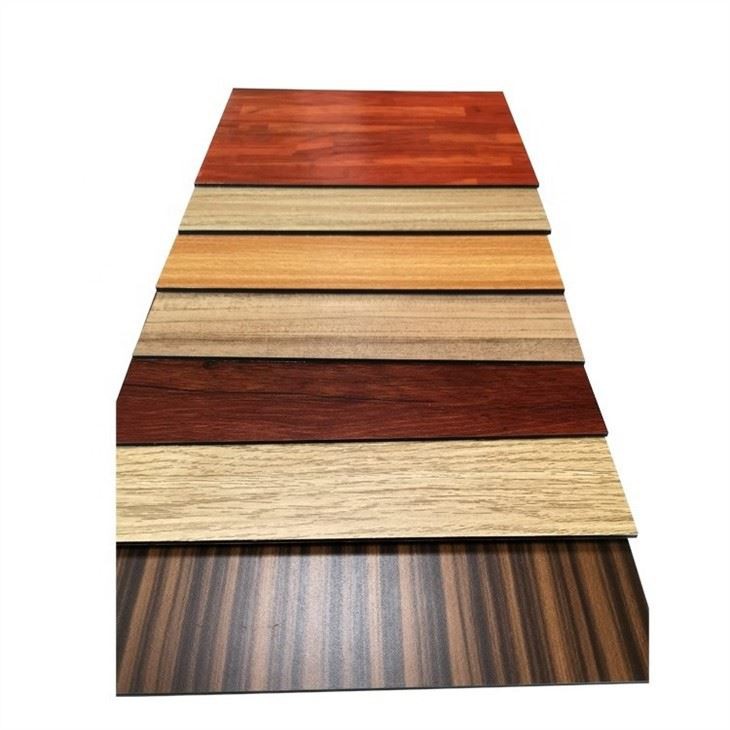
Ultra weather resistant
Due to the use of PVDF fluorocarbon paint based on KYNAR 500, it has unique advantages in terms of weather resistance. It will not damage its beautiful appearance no matter in the hot sunshine or cold wind and snow, and can last up to 20 years. fade.

High surface flatness
Due to the sophisticated technology used in the processing of aluminum-plastic panels, the surface of the produced products is very smooth, which can be well reflected in decoration. It is especially intuitive for exterior wall decoration of large buildings.

Aluminum Plastic Panel Construction Technology
Framework
Stakeout work is carried out according to the actual center line and elevation points of the civil building; the design of the facade is based on the axis of the building. The aluminum plastic panel frame consists of horizontal parts and vertical parts. First draw the position line of the vertical pole, and then determine the anchor point of the vertical pole.
Fixed connector
Install the fixed connector on the basis of laying out the wires, fix the connector with electric welding, and apply anti rust paint twice on the weld. The connecting parts are welded and fixed with the embedded parts on the main structure. When there are no embedded iron parts in the main structure, expansion bolts can be drilled in the main structure, installed, and fixed with connecting iron parts.
Welding method
The frame is installed using welding method. Check the elevation and centerline position at any time during installation. At the same time, apply anti-rust paint to the cross-section connection welds. Keep hidden inspection records for fixed connectors, including the length, thickness, location and embedded elevation of the connector welds. , quantity and embedding depth.
Fixed frame
Install the aluminum-plastic plate on the inner frame of the profile, mill the screw holes first, and use rivets to fix the aluminum-plastic plate facings to the profile steel frame piece by piece; the gap between the plates is 10 to 15mm, and then inject silicone weather-resistant sealant; aluminum plate It is strictly forbidden to tear off the packaging paper before installation, and tear off the packaging protective film before completion; construction should be carried out in the direction indicated by the arrow on the aluminum-plastic plate.
Construction projects are divided into 3 types: A, B, and C; you have to buy panels based on the type of project you have. Type A is extremely fire-resistant, and it covers buildings taller than 4 floors. Type B is for 3 storeyed buildings, and Type C has the least amount of fire-resistivity, and here one or two-storeyed construction is used. In the UAE, a non-compliant aluminum composite panel having polythene core is not used. TSSC manufactures insulated panels that are resistant to fire. Aluminum sheets can be coated with polyvinylidene fluoride or fluoropolymer resin, or it could be polyester paint. The normal thickness available in these panels is 3mm, 4mm, and 6 mm. We also provide customized sizes to our clients.
Aluminum composite panels are used for external cladding for facades of buildings for canopy shopfronts, signage, hotels, and bars, shopping malls, offices, commercial buildings, etc. It is also used in interiors like wall coverings, cupboards, false ceiling, table-top, modular kitchen, wardrobe, etc. It’s also heavily used in the aircraft industry where weight saving and mechanical performance plays a critical role.
Wall cladding is a very modern trend, and the construction industry in the UAE swears by it. It refers to an insulated covering that is used on material for offering protection and a decorative look. It gives stability to the interiors against harsh weather conditions. There are different types of cladding available in the market, like tiles, glass, brick cladding, fiber, cement boards, aluminum composite panels, etc. An aluminum composite panel is very widely used as cladding materials, it’s extremely flexible and lightweight and also easy to install.
These composite panels are manufactured from two aluminum sheets that are well bonded to a non-aluminum core. We manufacture the core from thermoplastic that is non-combustible. This core has excellent insulating properties. The product has a smooth finish and comes in different colors and designs.
10 Year Warranty
Excellent surface flatness and smoothness
Weather, corrosion and pollutant resistance
Impact resistant
Lightweight and easy to fabricate
Easy to maintain

Product Applications of Aluminum Composite Panel

Exterior signage
Shop fitting, cabinet making
Advertisement
Point of sale displays
Trade stands
Transport
Partitioning, wall linings and suspended ceilings
CE \ SGS \ CTC \ Fire-resistant test report

We are a professional enterprise, specialized in the research and production of aluminum composite panels (ACP). We have rich experience and perfect equipment.The company was established in September 2003, located in shandong fei county, the area of more than 120 acres, notes The registered capital is 31.88 million yuan. The company has 5 domestic leading automatic hot pressing aluminum plastic composite plate production lines and supporting testing equipment, 2 complete Automatic fluorocarbon spraying line, more than 70 sets of sheet metal equipment, the annual production of all kinds of decorative materials 6 million square meters.


FAQ
Q: Are aluminum plastic panels waterproof?
Q: What is aluminum plastic panel roofing?
Q: Can aluminum plastic panels be bent?
Q: What is the strength of aluminum plastic panels?
Q: Can aluminum plastic panels be painted?
Q: What is the thickness of the aluminum plastic panel?
Q: Can you walk on aluminum roof panels?
Q: What is the thickness of the aluminum plastic panel roof?
Q: How to paste aluminum plastic panels?
Q: Can aluminum plastic panels be riveted?
Q: Are aluminum plastic panels fireproof?
Q: What is the difference between aluminum plate and aluminum plastic plate?
Q: What kind of paint is used for aluminum plastic panels?
Q: Is it necessary to apply primer before painting aluminum materials?
Q: What is the difference between polycarbonate panels and aluminum plastic panels?
Q:Will aluminum roofs get hot?
Q: What is the best adhesive for aluminium composite panels?
Q: What size are aluminum composite panel sheets?
Q: Can you rivet aluminum composite panel?
Q: Is aluminium composite panel fireproof?
We're well-known as one of the leading aluminum composite panel manufacturers and suppliers in China. If you're going to buy or wholesale high quality aluminum composite panel at competitive price, welcome to get pricelist from our factory.
